
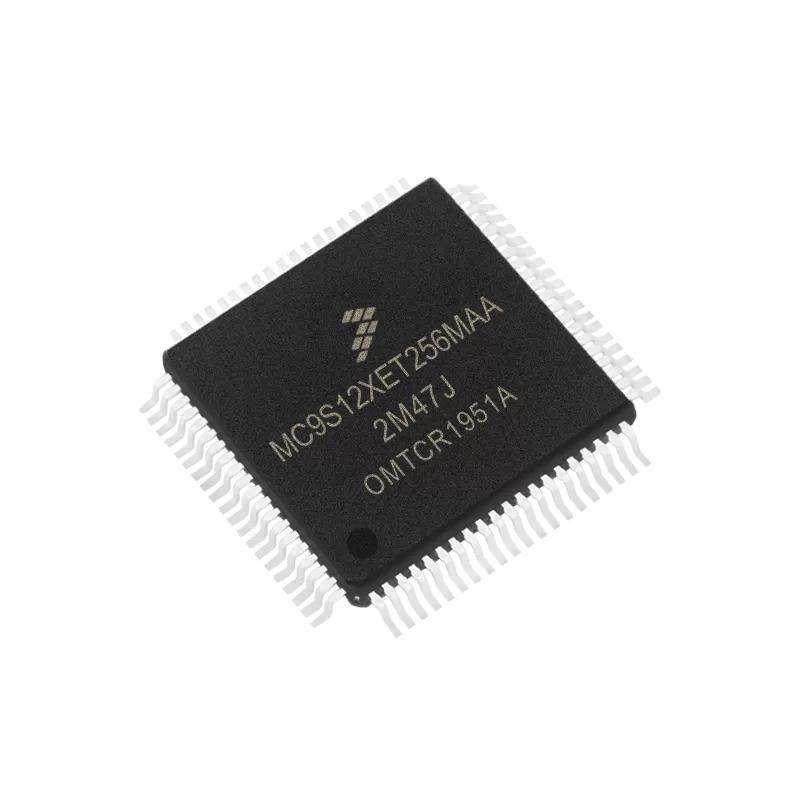
Choosing between Xilinx (now AMD) and Intel (formerly Altera) FPGAs is one of the most consequential decisions an engineering team makes. The wrong choice can mean redesigning boards, retooling firmware, or getting locked into a supply chain that can't deliver. This guide provides a practical, side-by-side comparison across the families that matter most for industrial, automotive, and data center applications — with a clear-eyed look at availability in mid-2026.
The Landscape: Two Giants, Two Ecosystems
AMD-Xilinx and Intel-Altera together control roughly 85% of the FPGA market. Both offer overlapping product tiers aimed at the same applications, but their architectures, toolchains, and supply chain dynamics differ in ways that directly affect procurement decisions.
| Tier | AMD-Xilinx | Intel-Altera | Best For |
|---|---|---|---|
| Advanced SoC | Versal (7 nm) | Agilex (10 nm / 7 nm) | AI acceleration, 5G, data center |
| Mid-Range SoC | Zynq-7000 / Zynq MPSoC (28 nm / 16 nm) | Arria 10 SoC (20 nm) | Industrial vision, motor control, automotive ADAS |
| Mid-Range Pure FPGA | Kintex-7 / Kintex UltraScale (28 nm / 20 nm) | Arria V / Arria 10 (28 nm / 20 nm) | Broadcast, test & measurement, protocol bridging |
| Cost-Optimized | Artix-7 / Spartan-7 (28 nm) | Cyclone V / Cyclone 10 (28 nm) | I/O expansion, sensor fusion, simple control logic |
| Legacy | Spartan-6 (45 nm) | Cyclone IV (60 nm), MAX 10 (55 nm) | Long-life industrial, migration-averse designs |
Versal vs Agilex: The High-End Battle
For teams building AI inferencing pipelines, radar/signal processing, or 400G networking equipment, the decision comes down to Versal vs Agilex. AMD-Xilinx's Versal platform integrates hardened AI Engines (AIE) — vector processors optimized for INT8/INT4 inference — alongside adaptable logic. Intel's Agilex counters with hardened BFLOAT16 tensor blocks and chiplet-based architecture that allows mixing compute, I/O, and transceiver tiles.
Takeaway: Versal has a two-year head start in the market with broader toolchain maturity (Vitis AI, Vitis HLS). Agilex offers superior fabric performance per watt on Intel 7 process and tighter integration with Intel Xeon platforms. Both families are currently on allocation, with lead times of 20–30 weeks. For new designs, budget at least 26 weeks from order to delivery and plan for certification cycles accordingly.
Kintex-7 vs Arria V: The Industrial Workhorses
For mid-range applications — factory automation controllers, protocol bridging (e.g., EtherCAT to TSN), multi-camera vision systems — Kintex-7 and Arria V remain dominant. Kintex-7 offers higher logic density (up to 478K logic cells vs. Arria V's 503K — roughly parity at the top end) and a larger ecosystem of IP cores. Arria V edges ahead on transceiver power efficiency and offers a hardened ARM Cortex-A9 in the SoC variant without the price jump of Zynq.
Availability matters here more than raw specs. Kintex-7 parts are currently quoting 22–26 weeks across most distributors, while Arria V GX variants have been spotty with some speed grades on allocation-only status. Cross-referencing between these families is feasible at the PCB level — both use similar ball-grid packages — but IP migration requires non-trivial rework.
Zynq vs Stratix: SoC Selection for Embedded Systems
The Zynq-7000 and Zynq UltraScale+ MPSoC families combine ARM Cortex-A processors with FPGA fabric, making them popular in vision-guided robotics, software-defined radio, and automotive driver-assistance systems. Intel's closest equivalent is the Arria 10 SoC (ARM Cortex-A9, 20 nm) and Agilex SoC (quad-core ARM Cortex-A53).
Zynq's ecosystem advantage is substantial — Petalinux, PYNQ, and the broader open-source community around Zynq make board bring-up significantly faster. Intel SoCs are more deeply integrated with Intel's Quartus toolchain and Intel distribution of OpenVINO for edge AI workloads, which benefits teams already standardized on Intel platforms.
Supply Chain Reality Check: Q3 2026
No FPGA selection guide in 2026 is complete without a candid discussion of availability. Key observations:
28 nm is the pinch point. Kintex-7, Zynq-7000, Cyclone V, and Arria V all compete for the same mature node capacity. Foundries are allocating wafer starts to higher-margin advanced nodes, squeezing legacy output.
Spartan-6 and Cyclone IV are in managed phase-out. If your design depends on these families, begin migration planning immediately. Spot-market inventory exists but is shrinking.
Versal and Agilex availability is improving as new fabs ramp, but priority allocation goes to hyperscale and defense customers. Industrial buyers must work through distributors with strong manufacturer relationships.
ADD Components maintains stocking positions across Xilinx and Intel FPGA families and provides BOM cross-reference analysis for teams evaluating migration paths. If you're staring at a 26-week lead time on your current FPGA, there may be a functionally equivalent part available from verified stock.
For FPGA availability checks, cross-reference support, and volume pricing, contact sales@add-components.com or reach out via WhatsApp. Include your part number and annual volume — we'll provide lead time and alternative sourcing options within one business day.