
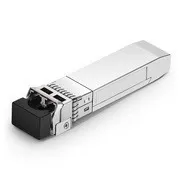
Complete SFP optical transceiver guide covering all variants: SX (850 nm MMF), LX (1310 nm SMF 10 km), EX (40 km), ZX (80 km), BiDi single-fiber, CWDM, and DWDM. Speeds from 100 Mbps to 2.5G CPRI. Industrial temperature (–40 to +85 °C), DDM/SFF-8472, and MSA compliance. Pre-coded modules for Cisco, HPE, Juniper. ADD Components Hong Kong.
SFP Transceiver: The Complete Guide to Small Form-Factor Pluggable Optics
The SFP (Small Form-Factor Pluggable) transceiver is the most widely deployed optical module form factor in networking history. Standardized by the SFP MSA (INF-8074i) and supporting digital diagnostics via SFF-8472, the SFP cage has shipped in hundreds of millions of ports across enterprise switches, industrial routers, telecom base stations, and media converters. Despite the industry's migration toward higher speeds, the SFP remains the lowest-cost fiber interface available and remains in active, high-volume production for brownfield maintenance, industrial automation, and cost-sensitive greenfield access-layer deployments.
All SFP Variants: Speed, Reach, and Wavelength Comparison
The SFP ecosystem spans multiple IEEE standards, wavelengths, and reach profiles. The table below captures every major commercially relevant variant in current production.
| Variant | IEEE Standard / Application | Speed | Wavelength | Fiber | Max Reach | TX Power (dBm) | RX Sensitivity (dBm) |
|---|---|---|---|---|---|---|---|
| SX | 1000BASE-SX | 1 Gbps | 850 nm (VCSEL) | MMF (OM2/OM3/OM4) | 550 m (OM2); 1 km (OM3) | –9.5 to –4 | –17 |
| LX | 1000BASE-LX | 1 Gbps | 1310 nm (FP/DFB) | SMF | 10 km (standard); 20 km (LX+) | –9.5 to –3 | –19 (PIN); –22 (APD) |
| EX | Proprietary extended-reach | 1 Gbps | 1310 nm (DFB) | SMF | 40 km | –5 to 0 | –24 (APD) |
| ZX | Proprietary ultra-long-reach | 1 Gbps | 1550 nm (DFB) | SMF | 80 km | 0 to +5 | –27 (APD) |
| BX (BiDi) | 1000BASE-BX10 | 1 Gbps | TX 1310 / RX 1490 nm (or reverse) | SMF (single strand) | 10 km; 20 km; 40 km | –9 to –3 | –21 (10 km); –23 (20 km) |
| 100BASE-FX | 100BASE-FX | 100 Mbps | 1310 nm (LED/FP) | MMF (50/125 µm) | 2 km | –20 to –14 | –31 |
| 100BASE-LX10 | 100BASE-LX10 | 100 Mbps | 1310 nm (FP) | SMF | 10 km | –15 to –8 | –25 |
| CPRI Option 3 | CPRI v6.1 / v7.0 | 2.4576 Gbps | 1310 nm (FP/DFB) | SMF | 10 km (standard); 20 km (extended) | –9.5 to –3 | –19 |
| CWDM | ITU-T G.694.2 | 1 Gbps | 1270–1610 nm (18 channels, 20 nm spacing) | SMF | 40–80 km (with APD) | 0 to +5 | –29 (APD) |
| DWDM | ITU-T G.694.1 | 1 Gbps | C-band 1528–1565 nm (100 GHz / 50 GHz grid) | SMF | 80–120 km | 0 to +5 | –29 (APD) |
1000BASE-SX and 1000BASE-LX: The Mainstream Duo
The SX and LX variants account for over 85% of all 1G SFP module shipments. SX uses an 850 nm VCSEL and operates over multi-mode fiber at distances up to 550 meters on OM2 — sufficient for in-building riser and horizontal cabling in enterprise LAN environments. The low-cost VCSEL transmitter, combined with the ubiquity of OM3/OM4 multi-mode fiber in campus and data center environments, makes SX the default short-reach 1G optical interface. LX shifts to 1310 nm single-mode operation, delivering 10 km reach with a standard FP laser and up to 20 km with a DFB-based extended variant (often called LX+). An FP laser at 1310 nm sits within the zero-dispersion window of G.652 single-mode fiber, optimizing signal integrity without dispersion compensation. For mixed fiber environments, LX modules can drive multi-mode fiber when paired with a mode-conditioning patch cord, though this is not the recommended permanent design choice.
EX and ZX: Extended and Ultra-Long Reach
Beyond the standard 10 km LX envelope, EX (extended reach, 40 km) and ZX (ultra-long reach, 80 km) variants address campus-backbone, metro-access, and utility-wide-area applications where a single 1G optical span must bridge tens of kilometers without intermediate regeneration. EX modules use a 1310 nm DFB laser with higher launch power (–5 to 0 dBm) and an APD-based receiver with sensitivity around –24 dBm, yielding a link budget of approximately 19 dB. ZX modules shift to 1550 nm — the attenuation minimum of silica fiber — and employ DFB lasers with launch powers of 0 to +5 dBm together with high-sensitivity APD receivers (–27 dBm or better), achieving link budgets in the 27–32 dB range. At 80 km on standard G.652 fiber, chromatic dispersion at 1550 nm (~17 ps/nm·km) introduces approximately 1,360 ps/nm of accumulated dispersion, which can begin to close the eye at 1.25 Gbaud; ZX variants rated for 100+ km may incorporate dispersion-tolerant transmitter design or electronic dispersion compensation.
BiDi (BX): Single-Fiber Bidirectional Transmission
BiDi (bidirectional) SFP transceivers — also known under the IEEE 1000BASE-BX10 designation — transmit and receive on a single strand of single-mode fiber using wavelength-division multiplexing within the module. A typical BiDi pair uses 1310 nm for the upstream transmitter and 1490 nm for the downstream transmitter on the opposite end, with internal WDM filters separating the two paths at each transceiver. Since BiDi modules must be deployed in matched pairs (one "U" upstream unit and one "D" downstream unit), procurement planning requires attention to pairing logic. The primary value proposition of BiDi is fiber-plant conservation: by halving the fiber count required for full-duplex operation, it doubles the effective capacity of existing single-strand infrastructure. This is particularly relevant in carrier access networks, fiber-to-the-antenna (FTTA) deployments, and utility SCADA networks where dark fiber pairs are scarce or expensive to lease.
CWDM and DWDM: Wavelength-Division Multiplexed SFPs
For operators multiplexing multiple 1G channels onto a single fiber pair, CWDM (Coarse WDM) and DWDM (Dense WDM) SFP transceivers provide ITU-grid-aligned wavelength options. CWDM SFPs are available on 18 channels from 1270 nm to 1610 nm with 20 nm spacing per ITU-T G.694.2, enabling up to 18 independent 1G channels on one fiber pair without active temperature stabilization — the DFB lasers are passively cooled, reducing cost and power consumption. Practical CWDM reach with APD-based receivers is 40–80 km depending on channel wavelength (higher-loss channels in the 1270–1330 nm water-peak region benefit from G.652.C/D low-water-peak fiber). DWDM SFPs operate in the C-band (1528–1565 nm) on a 100 GHz or 50 GHz ITU grid per G.694.1, supporting up to 44 channels (100 GHz) or 88 channels (50 GHz) on a single fiber pair. DWDM modules require temperature-stabilized TEC-cooled lasers to maintain sub-nanometer wavelength accuracy, increasing power consumption to approximately 1.5–2 W. They typically serve metro and regional transport networks where fiber exhaust necessitates high channel counts.
100 Mbps and 2.5G CPRI: Niche SFP Speed Grades
While 1 Gbps dominates the SFP market, 100 Mbps and 2.5 Gbps (CPRI) variants serve specific verticals. The 100BASE-FX SFP (100 Mbps over MMF at 1310 nm, 2 km reach) and 100BASE-LX10 SFP (100 Mbps over SMF at 1310 nm, 10 km reach) support legacy industrial Ethernet protocols — PROFINET, EtherNet/IP, Modbus TCP — where PLCs and RTUs operate at Fast Ethernet line rates and 1G capability is unnecessary overhead. At the other end of the SFP speed envelope, 2.4576 Gbps CPRI (Common Public Radio Interface) Option 3 SFPs carry digitized RF between the baseband unit (BBU) and remote radio head (RRH) in 4G/LTE distributed base station architectures. CPRI SFPs typically use 1310 nm DFB lasers for 10–20 km single-mode spans and require strict jitter performance (< 2 ps RMS) and low latency characteristics.
Industrial Temperature and DDM: Non-Negotiable for Outdoor and Harsh Environments
Commercial-temperature SFP modules rated for 0 to +70 °C are unacceptable in outdoor cabinets, factory floors, transportation systems, and un-conditioned utility enclosures. Industrial-temperature (–40 to +85 °C) SFP modules use extended-temperature-rated laser diodes, temperature-compensated bias current control loops, hermetically sealed TO-can packaging, and enhanced burn-in screening. The price premium — typically 30–50% above commercial-temp equivalents — is negligible compared to the cost of a single truck roll to replace a failed module at a remote cell site or substation. Digital Diagnostics Monitoring (DDM), per the SFF-8472 specification, provides real-time telemetry of transmit power, receive power, laser bias current, module temperature, and supply voltage over the I²C management interface. In carrier and industrial environments, DDM enables predictive maintenance: a gradual decline in transmit power or increase in bias current signals impending laser degradation before a hard link failure occurs, allowing scheduled replacement during maintenance windows rather than reactive outage response.
Procurement Reality: Massive Installed Base, Counterfeit Risk
The SFP form factor has been in production for over 20 years. Estimates place the global installed base of SFP-caged ports above 300 million, with annual module consumption in the tens of millions. This enormous market has attracted a parallel ecosystem of counterfeit and sub-standard modules — transceivers built with recycled laser diodes, out-of-spec extinction ratios, non-compliant EEPROM data, and inadequate burn-in. The symptoms are well-known to network operators: intermittent link flaps at temperature extremes, CRC errors under load, and premature end-of-life failure at 18–24 months instead of the expected 7–10 year service life. ADD Components sources exclusively from ISO 9001-certified manufacturing partners with full lot traceability, per-module test reports, and MSA-compliant EEPROM coding for Cisco, HPE, Juniper, Fortinet, MikroTik, and all major OEM platforms. For procurement teams maintaining large brownfield networks, the lowest-quoted unit price is rarely the lowest total cost of ownership.
Last updated on July 08, 2026